Bruxism (BRUK-siz-um) is the involuntary grinding or clenching of teeth. It’s the primary cause of teeth wear, cracks, sensitivity, gum recession, headaches, and TMJ’s disorders.
Although worn teeth and fractures are often attributed to aging and chewing patterns, this perspective isn’t entirely accurate. Teeth enamel is the hardest tissue in our body, and our diet mainly consists of soft foods. While chewing our teeth usually don’t come into contact, and a defense mechanism prompts us to quickly open our mouth when biting into something hard.
So, why do teeth become worn or break? The main reason is often because of untreated bruxism, which many people don’t even know they have.
Bruxism originates from the nervous system and is often triggered by stress. However, it can also be linked to medication, caffeine, alcohol, drugs, or sleep apnea. While bruxism is observed in children, it’s generally a normal, physiological behavior that doesn’t require intervention. On the other hand, in adults, it becomes a pathological issue demanding treatment. The use of an occlusal splint is an ideal treatment approach, aiming to prevent any damage or maintain the current condition of teeth, as well as to treat many other problems.
Bruxism can cause a number of health and dental problems including TMJ disorders:
Tooth mobility or pain to biting Gum recession Cold sensitivity
Worn or fractured dentition Notches at the gum line Failure of dental work
Worn dentition can make people appear older, and muscle hyperactivity can lead to a more square-shaped face
Restricted mouth opening Lockjaw Clicking and popping of the joints
Headache (particularly pain in the temples or in the back of the head)
Pain of jaw joints, which may manifest in front or referred to the ear
Ringing in the ear Vertigo Dizziness
Tenderness, pain or fatigue of face muscles Neck or shoulder pain
EARLY STAGE
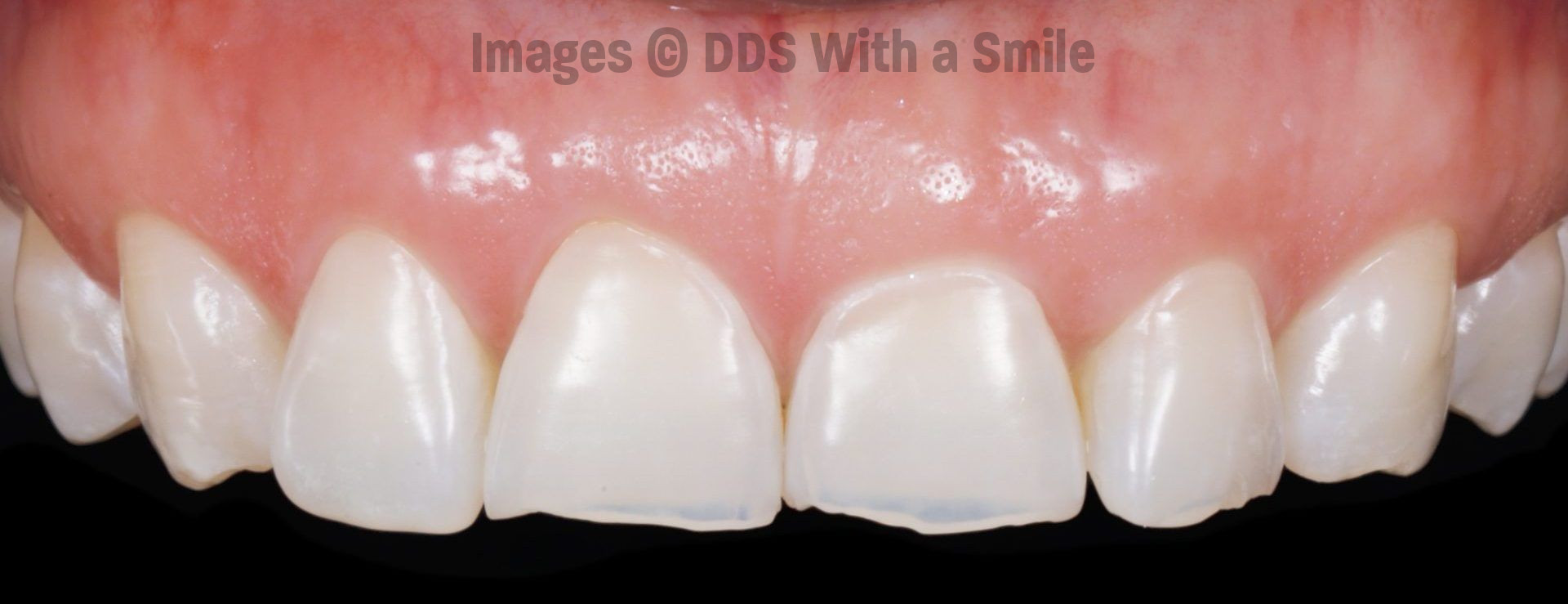
In the left photo, you can observe a tooth with a fractured edge in a 23-year-old patient, while the right photo illustrates the cause of this fracture when the teeth come into contact during bruxism.
In the left photo, you can observe a tooth with a fractured edge in a 25-year-old patient, while the right photo illustrates the cause of this fracture when the teeth come into contact during bruxism.
In the left photo, you can observe a tooth with a fractured edge in a 26-year-old patient, while the right photo illustrates the cause of this fracture when the teeth come into contact during bruxism.
ADVANCE STAGE
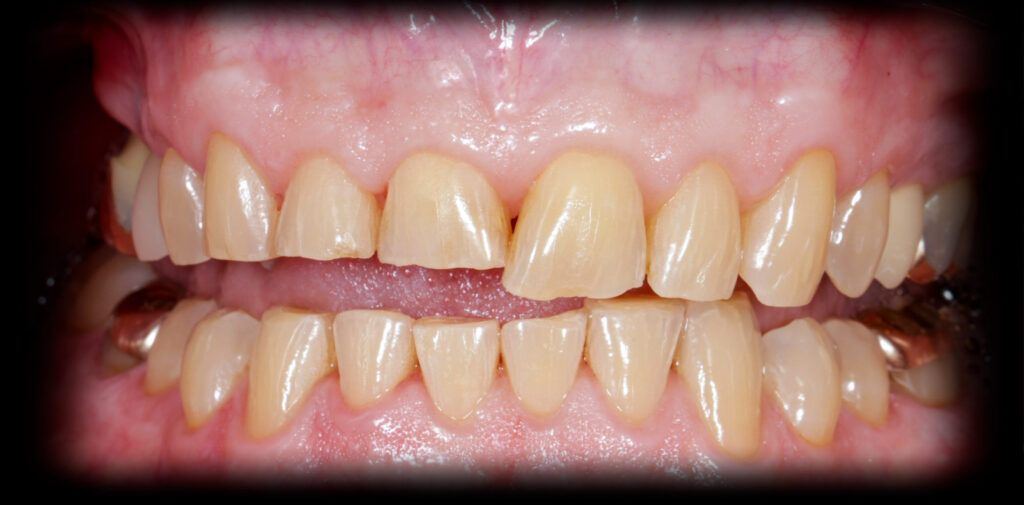
In the left photo, you can observe short and worn teeth due to bruxism, while in the right photo, you can see the contact between the teeth during bruxism, which highlights the resulting trauma.
In the left photo, you can observe worn dentition with chipped and rough edges due to bruxism, while in the right photo, you can see the contact between the teeth during bruxism, which clearly shows the damage caused by this.
Multiple problems caused by bruxism, including gum recession, abfraction, broken and worn teeth
Multiple problems caused by bruxism, including failing dental work, broken and worn teeth
In the field of dentistry, there’s a continuing search for the perfect material to replace teeth, a material that mimics the natural appearance of a tooth, is hard enough not to break but wears down similarly to natural teeth. Unfortunately, there’s not an equal dedication to prevent the degradation of the best material provided by nature: our own teeth.
The most effective preventive treatment we have is the use of an occlusal splint, but why don’t people use them more? Most likely, it’s due to a lack of knowledge. Additionally, if these splints aren’t properly made, patients can find them uncomfortable, bulky, or causing problems like tooth and jaw pain, headaches, or even leading to increased teeth clenching. This underscores the critical importance of ensuring that splints are meticulously crafted to fulfill their intended purpose.
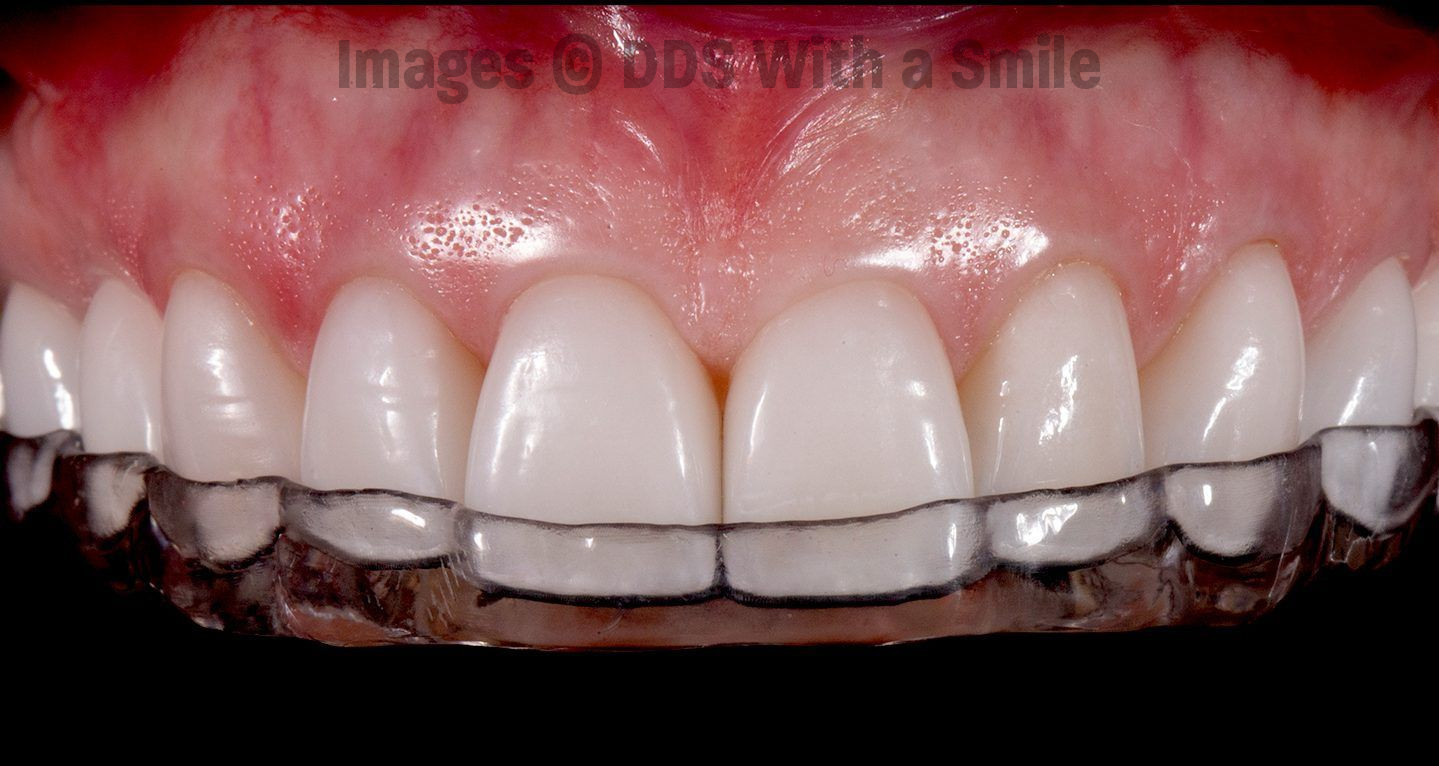
An occlusal splint is a prosthesis designed to replicate the function of the natural defense mechanism, responsible for protecting the entire masticatory system, including teeth, bone, gums, jaw, and muscles, thus promoting harmony between the teeth, joints, and muscles. Without this essential function, an occlusal splint is nothing more than a simple piece of material commonly known as a “night guard”.
Although they may appear similar, Occlusal splints and night guards work in a completely different manner. Occlusal splints are used to prevent damage and maintain current dental conditions. Additionally, they play a significant role in the treatment of temporomandibular joint (TMJ) disorders, migraines, neck pain, tinnitus, and vertigo. On the other hand, mouthguards do not address any of the issues mentioned above and, conversely, they can be responsible for many problems, as they redirect the destructive forces of bruxism towards unprotected joints or muscles.
At DDS WITH A SMILE, our dedication lies in providing the highest quality dental work. That’s why we proudly offer a 100% money-back satisfaction guarantee for one year with our occlusal splint.
Rosa
Advanced bruxism, reconstruction and prevention
Worn, irregular, and shortened teeth with an aged smile due to bruxism
Smile rejuvenation after restoring her teeth to their natural shape and size
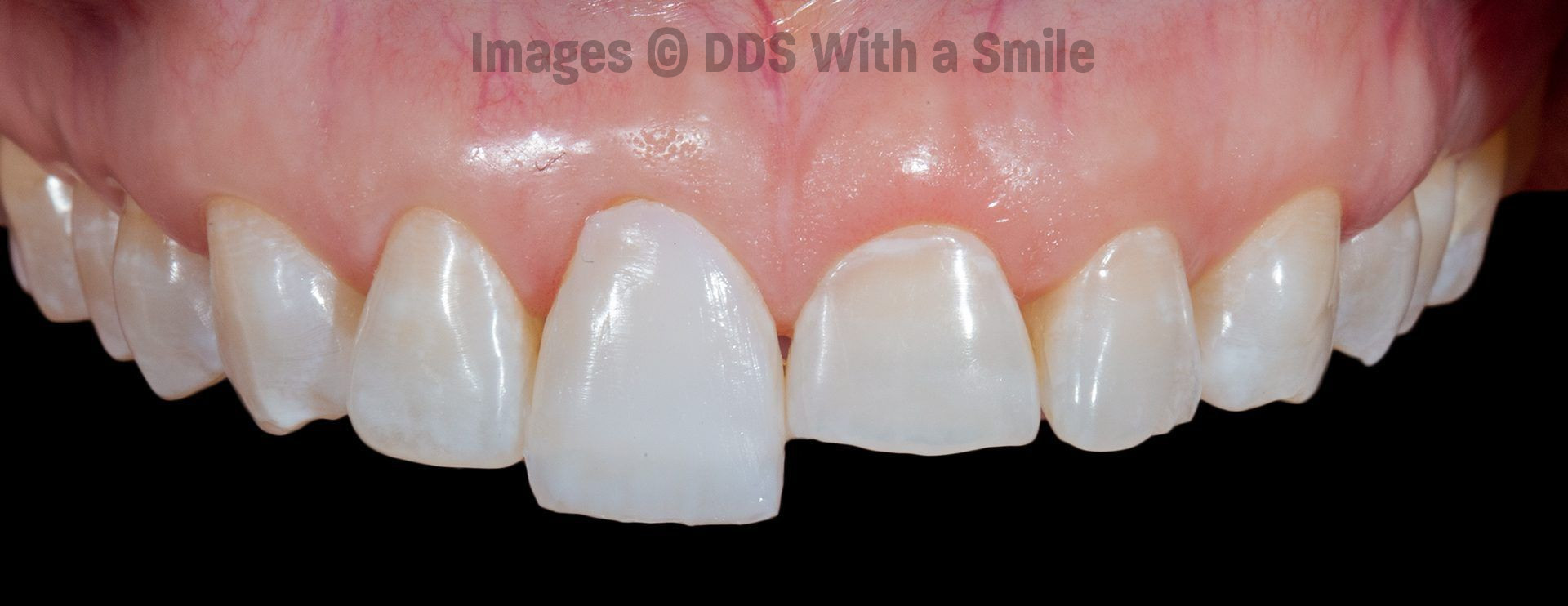
Worn dentition with chipped and rough edges caused by bruxism
The amount of tooth wear becomes obvious after restoring a single tooth
Teeth after being restored to their natural shape and size
Occlusal splint designed to protect the teeth, joints, and muscles from bruxism